Growing forests from local roots
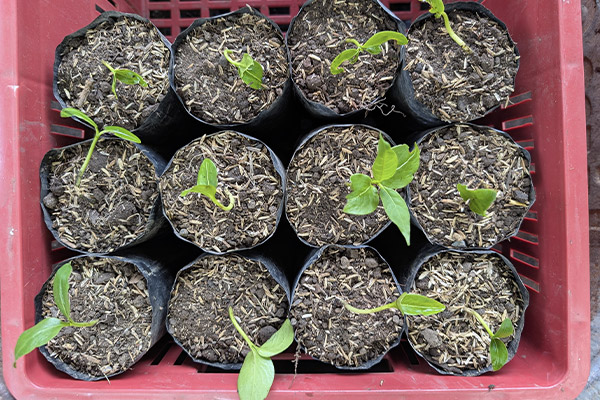
The native tree nursery at Café Río Lejos is an integral part of our restoration effort. We built it up to support forest regeneration on our farm and to contribute to wider renaturation efforts in the region.
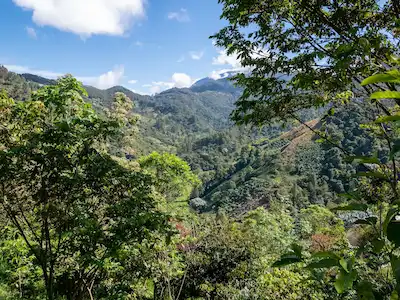
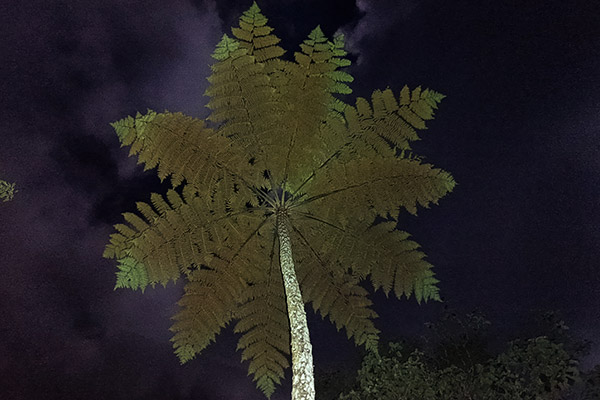
We focus on native tree species grown from seeds and seedlings from our reserve. They belong to the ecosystem of the Middle Andes mountain range and are adapted to its altitude, soil and climate. Therefore, they are perfectly appropriate for restoring soil and habitats in the Quindío region.
Why we need this tree nursery
Usually, reforestation projects are conducted with a small variety of easily accessible mass-produced seedlings. This results in forests with little diversity, which look more like plantations. It can take decades for other species to settle and spread through natural processes such as wind and animal excrement.
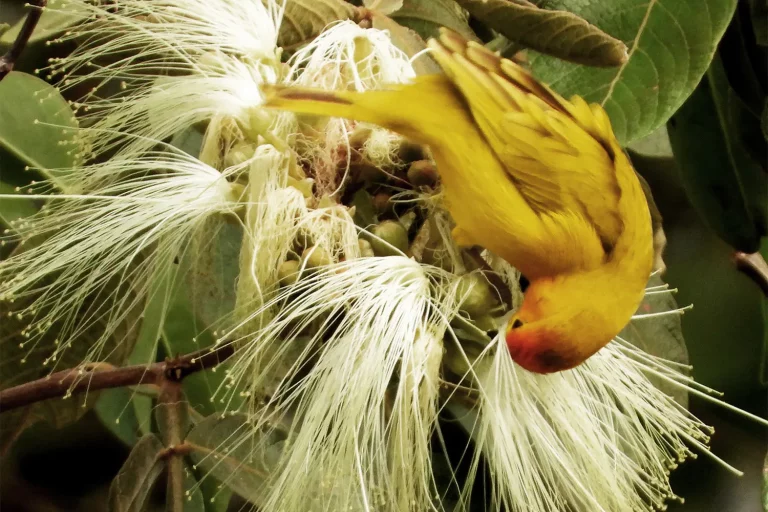
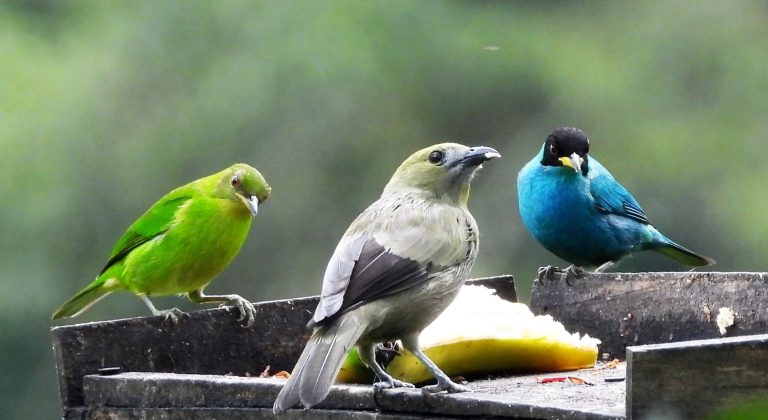
With the more than 100 different species of trees in our nursery, we enable ecological restoration that quickly creates a young forest closely resembling the original biodiversity of a primeval forest. From the outset, this attracts many birds, bats and other animals, which contribute to the spread of new species and accelerate the enrichment of biodiversity.
With our wide selection of trees, we can respond to specific local needs:
- restoring degraded soils with nitrogen-fixing legumes,
- suppressing aggressive, fast-growing weed,
- loosening soil compacted by cattle grazing,
- protecting watercourses,
- connecting forest fragments through ecological corridors,
- soil protection along erosion-prone slopes,
- introducing agroforestry,
- attracting birds and other animals.
We have several species available for each of these functions that allow a resilient restoration, supporting natural regeneration processes.
From forest to nursery, and back
The life of each tree begins in the surrounding forests. Seeds and young plants are collected from primary and regenerating forest areas within the reserve, as well as from neighbouring forests and partner farms.
In the nursery, seedlings are nurtured slowly and attentively until they are strong enough to be planted in regenerating areas. This process helps young trees adapt gradually, increasing their chances of survival once they are planted and create a new forest.
Field observation informs us which species grow better in a specific location, so that ongoing restoration work can be refined. In this way, the nursery forms a bridge between existing forest ecosystems and areas in recovery. It grows alongside the forest, responding to what the land reveals.
Sharing knowledge beyond the farm
The native tree nursery supports restoration beyond Café Río Lejos. In collaboration with neighbouring farms and local partners, we exchange planting material, experience and practical knowledge.
These exchanges help other landowners restore degraded land and introduce agroforestry systems adapted to local conditions.
Each tree grown here carries local knowledge — of soil, climate and ecology — and becomes part of a long-term commitment to living landscapes.