Industrial versus organic agriculture
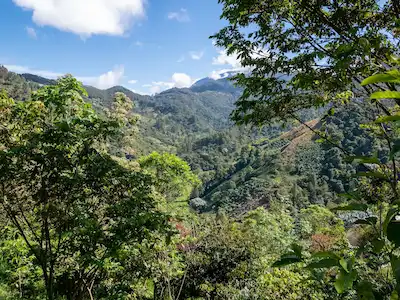
In the Quindío province of the Colombian Andes, decades of deforestation for cattle grazing and monocultures have profoundly altered the landscape. Forests were fragmented and water systems disrupted. Soil degradation and erosion, especially on steep slopes, were the consequence and have caused serious damage. Man-made climate change with its increase in extreme weather events – heavy rainfall and prolonged dry periods – accelerates these processes. Plants become ‘stressed’, lose their resistance and are more easily attacked by pests such as harmful fungi and insects.
Industrial agriculture combats these effects with chemical products: artificial fertilisers, pesticides, herbicides and fungicides. However, these also destroy the microorganisms in the soil, thereby exacerbating the crisis: the lack of nutrients and protection must be increasingly compensated for with chemical products, until the soil is ‘dead’.
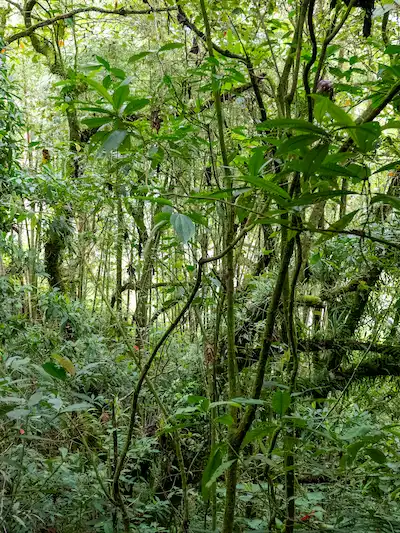
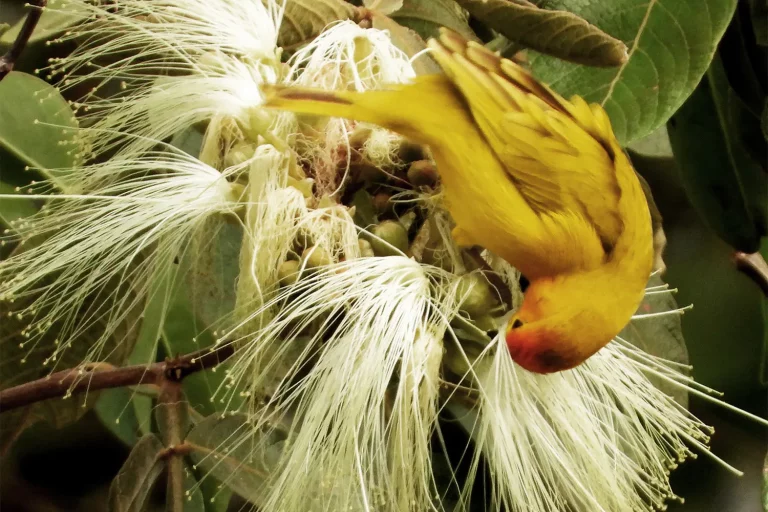
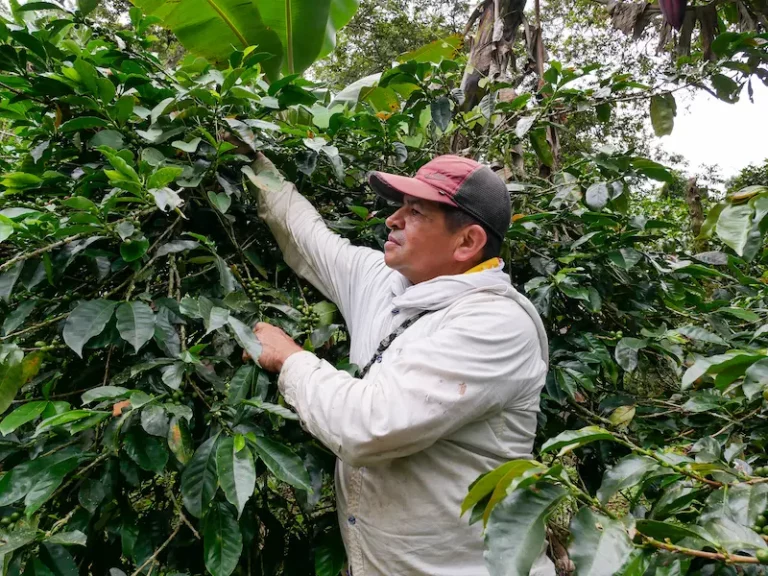
Ecological restoration takes a different approach: it aims to restore natural vegetation, which protects the soil and its inhabitants in multiple layers and supplies them with nutrients. The canopy of shade trees shields the soil from excessive sunlight and drought, and slows down the force of rainfall. Beneficial animals such as birds and bees find shelter and food in the trees and shrubs. The soil is covered by a thick layer of humus made up of fallen leaves and branches, which microorganisms consume and convert into nutrients for their environment. Humus absorbs large amounts of rainwater and releases it gradually. The tree roots hold the soil together. This creates a favourable microclimate and a stable environment in which fruit trees such as coffee thrive.
Organic farming is no longer just a niche product for eco-freaks, but probably the only viable way to respond to the challenges of climate change. At the same time as it enables a resilient agriculture, it helps us combat the causes of climate change, as this type of farming absorbs large amounts of CO2 from the atmosphere and stores it in plants and soils.
From cattle pasture to forest
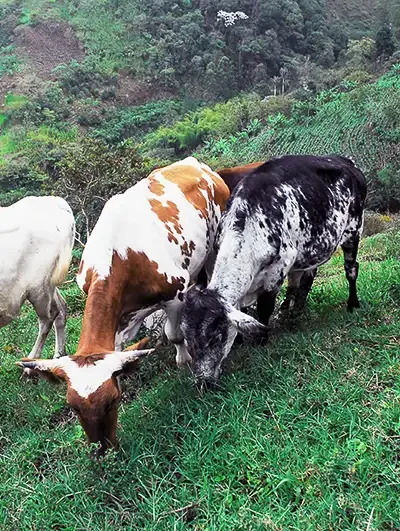
Up until 2016, heavy cows grazed on the steep slopes of Finca La Esmeralda. The meat industry, especially cattle farming, is a major factor in climate change. In addition to the enormous loss of biomass and biodiversity through deforestation, the cattle produce the climate-damaging greenhouse gas methane. We therefore decided to end cattle farming. Switching to other agricultural products such as coffee is complicated, as the heavy animals have compacted the soil and acidified it with their urine.
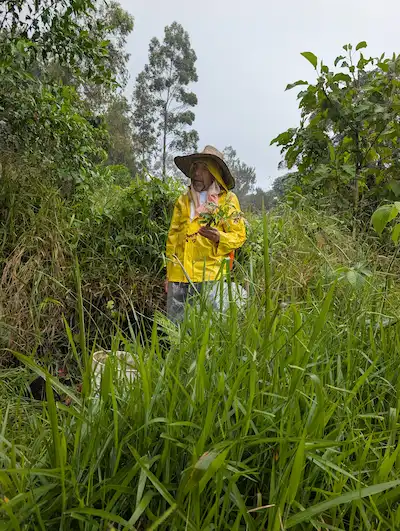
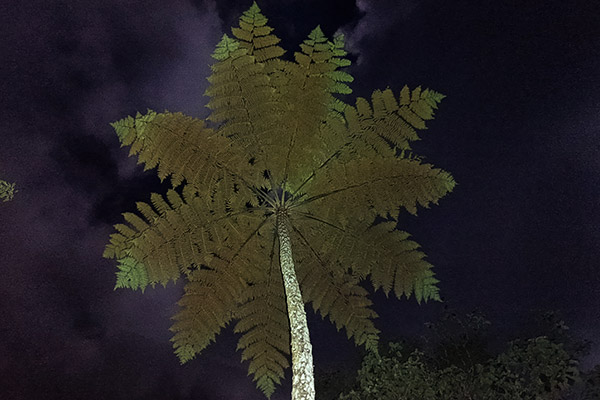
We have returned the cattle pastures of Finca La Esmeralda with an area of around 5 hectares to nature, removed kilometres of barbed wire and planted first islands of pioneer trees. We repeatedly freed the young trees from aggressive weeds, grasses introduced for cattle grazing and an invasive fern that thrives on the acidified soils. In this way we give the planted and self-seeding trees a growth advantage. In a relatively short time, an open young forest with an impressive diversity of trees has emerged here, which we are now systematically enriching with rare and ecologically valuable species.
Natural regeneration and ecological restoration
Colombia offers an amazing biodiversity. To date, we discovered more than 130 native trees on our farm. Many of them have special characteristics to adapt to difficult conditions.
- There are pioneer trees that thrive on barren soil.
- Fast-growing trees manage to penetrate tall grass. Their fallen leaves suppress weeds and allow slower-growing trees to rise in their shade.
- Legumes absorb atmospheric nitrogen and convert it into proteins. Their fallen leaves and branches vertilize other plants.
- Trees with massive roots extract nutrients from deep soil and make them available to the biosphere.
- Some trees store large amounts of water and release it throughout the year.
In some areas, an ensemble of pioneer trees and subsequent forest trees manage to restore degenerated soils and deforested zones on its own. Seeds arrive carried by wind, birds and mammals from surrounding forest areas.
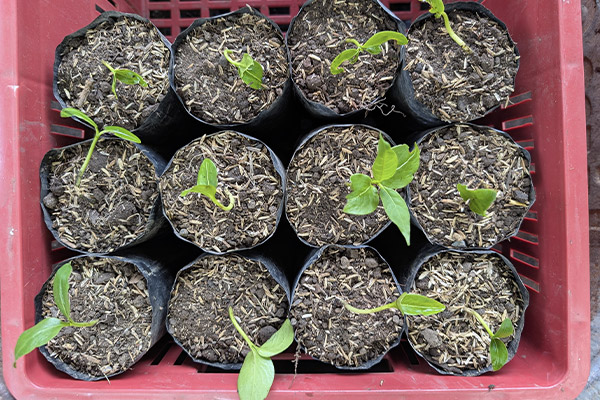
This natural regeneration may take a few years, but also decades. In more severely degraded areas, where aggressive weeds, climbing plants and depleted soils dominate, natural regeneration may even fail. This is where we intervene to give the trees an advantage by cutting the weed until they overtrump the undergrowth. We plant pioneer plants, species that attract birds (which in turn ‘drop’ new tree seeds in their excreta), later forest trees and rare species to restore biodiversity.
From our experience and based on scientific, ecological and socio-economic principles, we offer our advice to other farms and projects, aimed at achieving a sustainable reversal of forest loss.
- Our projects are cost-effective, transparent and sustainable.
- We develop renaturation models tailored to the needs of each farm.
- We plant a broad range of trees – around 100 different native species, some of them endangered – that we select based on natural conditions and the original vegetation.
- We work transparently and report regularly.
- Our costs are low because we do not maintain an expensive administration and do not book climate-damaging flights to projects. We use local plants from our nurseries and cooperating nurseries and carry out planting and monitoring ourselves.